Finish Basement in Ontario: Comprehensive Guide to Basement Finishing and Renovation Costs, Permits, and Design
Finishing a basement in Ontario can transform an underutilized space into a valuable asset for your home. This comprehensive guide will explore the essential aspects of basement finishing, including renovation costs, required permits, and design considerations. Homeowners often face challenges when deciding how to maximize their basement’s potential, whether for additional living space, rental income, or simply enhancing their home’s value. By understanding the costs involved, the necessary permits, and the latest design trends, you can make informed decisions that align with your goals. This article will cover the typical renovation costs, the permits required for basement projects, and key design considerations to ensure your finished basement meets your needs.
Renovation Costs
When considering a basement renovation, understanding the associated costs is crucial. The expenses can vary significantly based on the scope of the project, the quality of materials used, and the complexity of the design. Basic finishing costs typically range from $40,000 to $55,000, while mid-range renovations can cost between $55,000 and $75,000. For high-end luxury renovations, the costs can exceed $100,000. Legal basement apartments, which require additional considerations, can range from $90,000 to $120,000.
What Are the Typical Basement Renovation Costs in Ontario?
The average costs for basement renovations in Ontario can be categorized as follows:
- Basic Finishing: $40,000 to $55,000
- Mid-Range Renovations: $55,000 to $75,000
- High-End Luxury Renovations: $75,000 to $100,000 or more
- Legal Basement Apartments: $90,000 to $120,000
These figures provide a general overview, but actual costs may vary based on specific project requirements and local market conditions.
How Do Regional Factors Influence Basement Finishing Prices?
Regional factors play a significant role in determining basement finishing prices. Areas with higher demand for housing or limited space may see increased costs due to competition among contractors and the availability of skilled labor. Additionally, local building codes and regulations can impact the overall expenses associated with renovations.
What Are the Cost Components of Basement Renovation?
Several components contribute to the overall cost of basement renovations, including:
- Size and Layout Complexity: Larger spaces or intricate designs require more materials and labor.
- Need for Waterproofing: Ensuring the basement is waterproofed can add to the initial costs but is essential for long-term durability.
- Quality of Finishes: The choice of materials, such as flooring, cabinetry, and fixtures, can significantly affect the budget.
Required Permits
Before starting a basement renovation, it’s essential to understand the permits required by local authorities. These permits ensure that the renovation complies with safety codes and regulations, protecting both the homeowner and the integrity of the building.
Which Building Permits and Regulations Apply to Basement Finishing in Ontario?
In Ontario, several permits may be required for basement finishing projects, including:
- Building Permit: Required for structural changes, such as adding walls or altering the layout.
- Electrical Permit: Necessary for any electrical work, including new wiring or lighting installations.
- Plumbing Permit: Required if plumbing is being added or modified.
When Is a Building Permit Required for Basement Renovation?
A building permit is typically required when:
- Structural changes are made to the basement.
- New electrical or plumbing systems are installed.
- The renovation involves creating a legal basement apartment.
How Do Ontario’s Safety Codes Affect Basement Finishing Projects?
Ontario’s safety codes are designed to ensure that all renovations meet specific safety standards. These codes cover various aspects, including fire safety, electrical systems, and plumbing. Compliance with these codes is crucial to avoid potential hazards and ensure the safety of occupants.
Design Considerations
Designing a finished basement involves more than just aesthetics; it requires careful planning to ensure functionality and comfort. Homeowners should consider the purpose of the space and how it will be used.
What Are the Best Basement Design Ideas and Trends in Ontario?
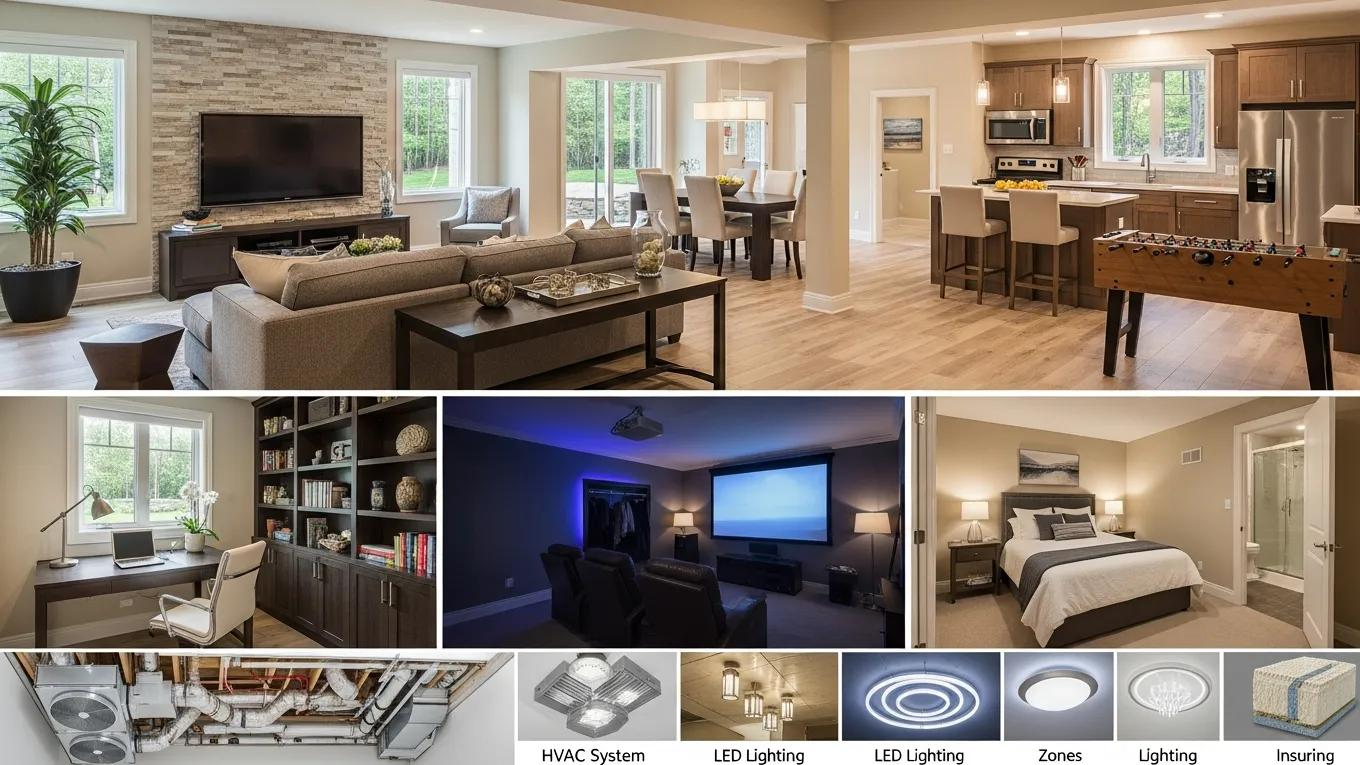
Current design trends for basements in Ontario include:
- Open Concept Layouts: Creating a seamless flow between different areas enhances usability.
- Multi-Functional Spaces: Incorporating areas for entertainment, work, and relaxation maximizes the basement’s potential.
- Energy-Efficient Designs: Utilizing sustainable materials and energy-efficient lighting can reduce long-term costs.
How Can Multi-Functional Spaces Enhance Your Finished Basement?
Multi-functional spaces allow homeowners to maximize the utility of their basements. For example, a basement can serve as a guest suite, home office, and entertainment area all in one. This versatility not only enhances the living experience but also increases the property’s value.
What Energy-Efficient Design Options Are Recommended for Basements?
Incorporating energy-efficient design options can lead to significant savings on utility bills. Recommended options include:
- Energy-Efficient Insulation: Proper insulation helps maintain temperature and reduces heating and cooling costs.
- LED Lighting: Using LED fixtures can lower energy consumption while providing adequate illumination.
- High-Efficiency Windows: Installing energy-efficient windows can improve natural light and reduce heat loss.
Which Materials and Construction Techniques Are Ideal for Basement Finishing?
Choosing the right materials and construction techniques is vital for a successful basement renovation. Recommended materials include:
- Moisture-Resistant Drywall: Essential for preventing mold and mildew in damp environments.
- Engineered Flooring: Durable and resistant to moisture, making it suitable for basements.
- Quality Insulation: Proper insulation materials help regulate temperature and improve energy efficiency.
What Basement Insulation Options Are Suitable for Ontario Homes?
In Ontario, several insulation options are suitable for basements, including:
- Foam Board Insulation: Provides excellent thermal resistance and moisture control.
- Spray Foam Insulation: Offers superior air sealing and insulation properties.
- Fiberglass Batts: A cost-effective option that can be used in conjunction with vapor barriers.
How Does Basement Waterproofing Protect Your Investment?
Basement waterproofing is a critical step in protecting your investment. Effective waterproofing methods include:
- Interior Drainage Systems: Help manage water intrusion and prevent flooding.
- Exterior Waterproofing Membranes: Create a barrier against moisture from the outside.
- Sump Pumps: Actively remove water that accumulates in the basement.
How to Choose Reliable Basement Finishing Contractors in Ontario?

Selecting the right contractor for your basement finishing project is crucial for ensuring quality work and adherence to timelines. Here are some tips for choosing a reliable contractor:
What Credentials and Experience Should Ontario Contractors Have?
When evaluating contractors, consider their credentials and experience, including:
- Licensing and Insurance: Ensure the contractor is licensed and carries liability insurance.
- Experience in Basement Renovations: Look for contractors with a proven track record in basement projects.
- Knowledge of Local Building Codes: A good contractor should be familiar with the regulations specific to Ontario.
How to Evaluate Contractor Portfolios and Customer Reviews?
Reviewing a contractor’s portfolio and customer feedback can provide valuable insights into their work quality. Look for:
- Diverse Project Examples: A varied portfolio indicates versatility and experience.
- Positive Customer Reviews: Check online reviews and testimonials for feedback on reliability and quality.
- Transparency in Pricing: A reputable contractor should provide clear estimates and be upfront about potential costs.
This table summarizes the typical costs associated with different types of basement renovations in Ontario, helping homeowners budget effectively for their projects.
Understanding the types of permits required for basement renovations ensures compliance with local regulations and safety standards.
This comparison highlights the benefits of incorporating modern design features into basement renovations, emphasizing usability and efficiency.